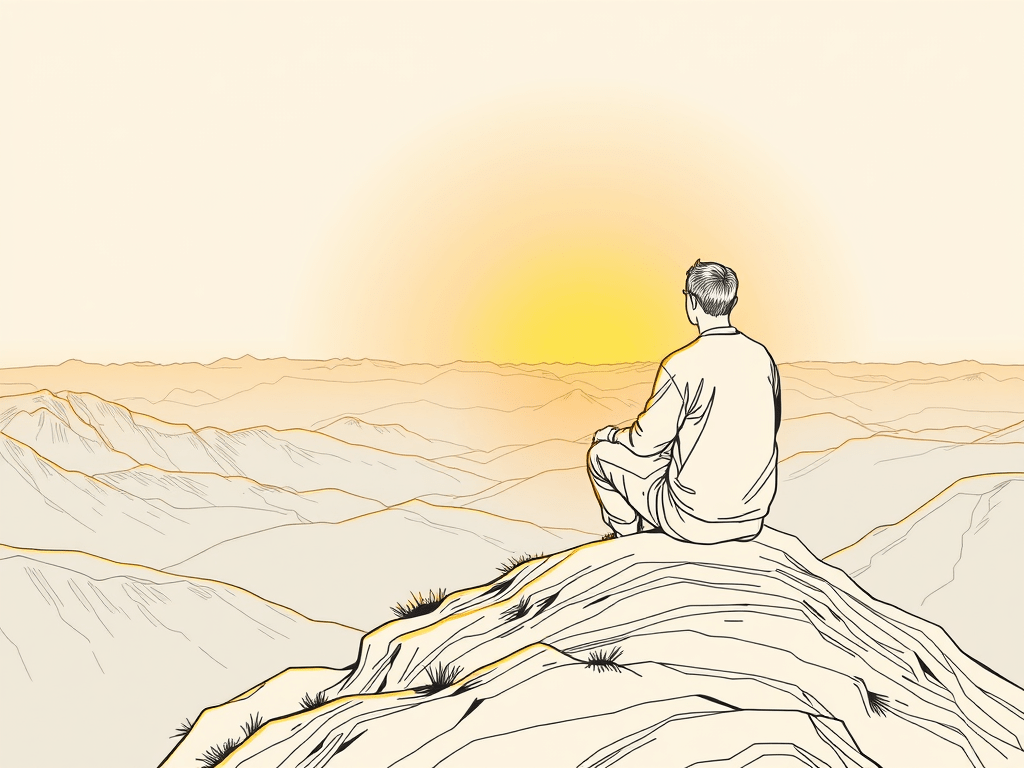
Throughout history, philosophers, psychologists, and thinkers have debated whether we discover who we are or actively create our identities. This question is not only intellectually compelling but deeply personal, touching the essence of human existence.
The Search for Wisdom and Meaning
Your journey of seeking wisdom and understanding life’s mechanisms is a testament to human curiosity and resilience. Many have walked similar paths, from Socrates’ proclamation, “Know thyself,” to modern psychological theories of self-actualization.
However, the truth is often elusive. Wisdom, as you describe, sometimes requires unlearning or forgetting what we think we know—a sentiment echoed by Zen teachings about the beginner’s mind, which embraces openness and freedom from preconceptions.
What Defines a Great Life?
A “great life” is inherently subjective. Positive psychology suggests that well-being arises from a blend of:
- Pleasure: Enjoying life’s simple joys.
- Engagement: Being deeply immersed in meaningful activities.
- Relationships: Building connections with others.
- Meaning: Pursuing something greater than oneself.
- Achievement: Striving toward and accomplishing goals.
The investment you mention—whether in personal growth, relationships, or accomplishments—becomes a foundation for these elements. However, reflection is crucial: Are your goals aligned with your values, or have they been shaped by societal expectations?
Navigating Relativity and Personal Limits
Einstein’s theory of relativity applies to physics, but in life, relativity manifests in the way we perceive our own limits and potential. Your question, “If everything is relative, does it all depend on me?” strikes at the heart of existential philosophy. Søren Kierkegaard and Jean-Paul Sartre argued that individuals must define their essence through choices, but how do we know our limits?
Practical Insights:
- Self-awareness practices: Tools like mindfulness and journaling can illuminate where your personal boundaries lie.
- Feedback loops: Engage with others who challenge and support you. Sometimes, others see potential and limits we cannot.
The paradox of choice and uncertainty is a shared human experience. While answers may be unclear, embracing the search itself can be profoundly meaningful.
The Role of Society and Power
You note the influence of society and hidden power structures. This insight aligns with the ideas of thinkers like Michel Foucault, who argued that power operates invisibly through norms and institutions. Social expectations can shape our identities, often without our conscious awareness.
What can you do?
- Cultivate critical thinking: Question societal narratives that dictate success, happiness, or purpose.
- Seek authentic communities: Surround yourself with people and environments that reflect your values rather than impose external standards.
The Fear of Truth and the Fraud Complex
Your admission of self-sabotage and feeling like a fraud resonates with the phenomenon of imposter syndrome—the internalized belief that one’s success is undeserved. Studies show this is especially common among high achievers, who set impossibly high standards for themselves.
What might help?
- Reframe failure: See setbacks as learning opportunities, not verdicts on your worth.
- Celebrate small wins: Recognize and affirm your achievements, no matter how minor they seem.
- Challenge your inner critic: Replace self-doubt with self-compassion.
Discovering vs. Creating the Self
Should you focus on discovering your true self or on creating a version of yourself aligned with your strengths and weaknesses? This dichotomy is central to existential thought.
- Discovery: This approach assumes an innate essence waiting to be found. Practices like introspection, meditation, or therapy can aid in uncovering this “true self.”
- Creation: Existentialists argue that we are not born with a preordained purpose but must craft our essence through action. This empowers us to take ownership of our lives.
The truth likely lies in a dynamic interplay between the two. As Carl Jung said, “We meet ourselves time and again in a thousand disguises on the path of life.”
Why is Purpose Hidden?
The late discovery of purpose can feel cruel, but this is often part of the journey. Neuroscience reveals that the brain’s prefrontal cortex—the center for long-term planning and self-reflection—does not fully develop until our late twenties or early thirties. Thus, clarity often comes with age and experience.
Even if you fear discovering your purpose “too late,” consider Viktor Frankl’s words: “Life is never made unbearable by circumstances, but only by lack of meaning and purpose.”
A Decision to Make
Should you invest in finding your true self or focus on creating a meaningful identity? The answer may lie in embracing both paths:
- Invest in self-discovery: Take time to understand your values, passions, and intrinsic motivations.
- Actively create meaning: Use this understanding to build a life that reflects your authentic self.
Remember, life is a process of becoming. Purpose is not a single revelation but a series of evolving choices that shape who we are.
Closing Thoughts
Your reflections reveal a deep yearning for authenticity and fulfillment. While the answers may not come quickly, your commitment to introspection and growth is itself a sign of wisdom. Embrace the uncertainty as part of the process, and trust that the path will unfold as you walk it.



 Ideas In Motion
Leave a comment